
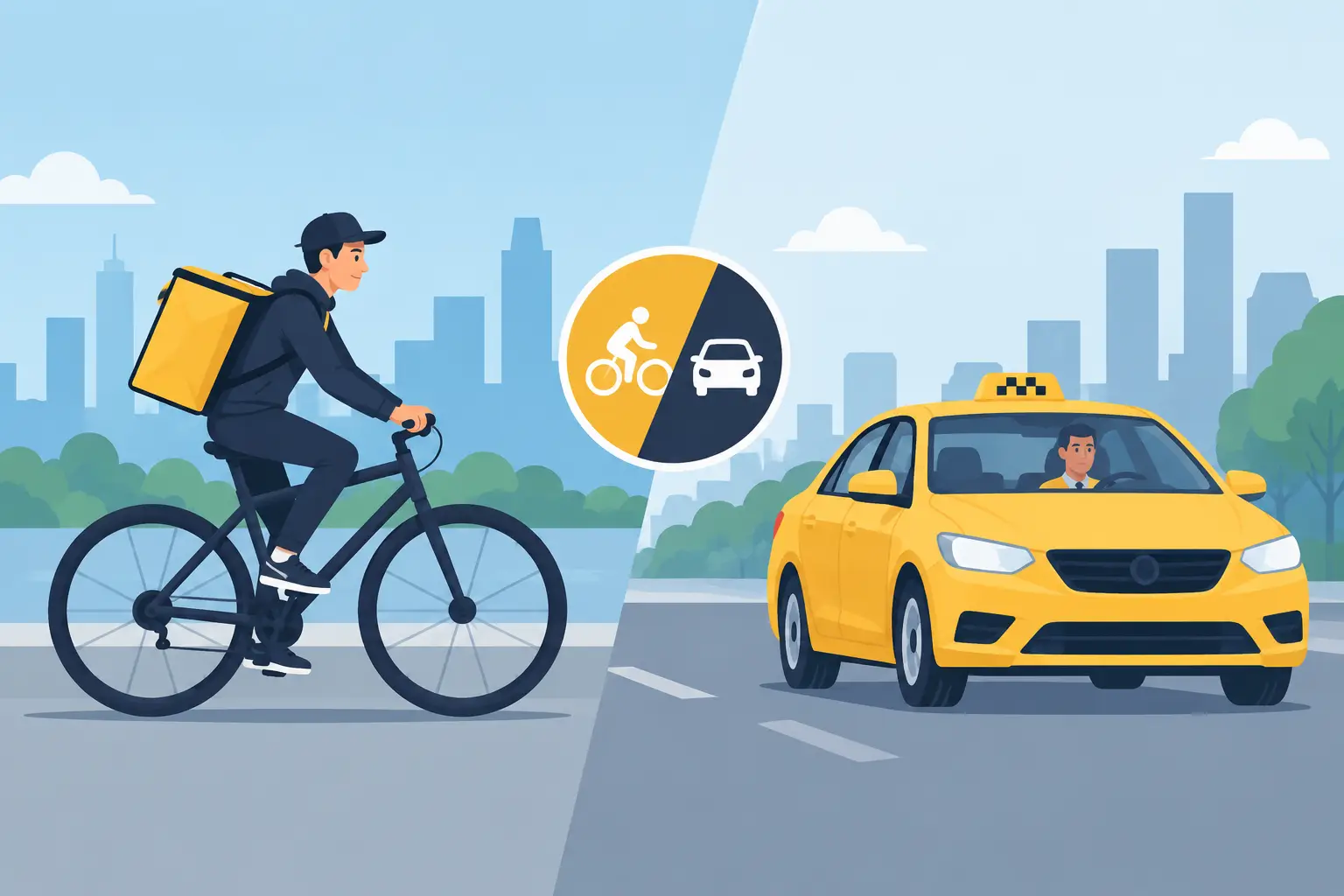
A personal courier vs taxi decision often starts with the same problem: something important is in the wrong place, and you need it moved now. A phone is left at home before a meeting. Keys are needed by a family member. A passport is sitting in an office while its owner is heading for the airport. Both a taxi and a courier may appear to offer a quick answer, but they are built to do different jobs.
A taxi is designed to transport passengers. A personal courier is there to collect an item, take responsibility for the journey and deliver it to the right person. When time, handover and care matter, that difference is more than a detail.
Personal courier vs taxi: the practical difference
The clearest difference is what happens before the vehicle starts moving. With a taxi, the journey usually begins when a passenger gets in. If you need an item collected from a shop, a home, a hotel reception or a colleague who cannot leave their desk, you may need to organise the handover yourself. You may also need someone at the destination ready to meet the driver.
A personal courier is arranged around the item. You provide the collection point, delivery address, contact details and any instructions that will help the driver complete the job properly. That could mean collecting a click-and-collect order with the correct reference, asking for a pharmacy order by name, collecting documents from reception or waiting briefly while somebody brings down a forgotten bag.
This matters when nobody involved has time to become a dispatcher. You should not have to persuade a taxi driver to handle a collection, explain the task in fragments or hope a last-minute arrangement works out. A courier job has one purpose: collect it and deliver it as fast as possible.
When a taxi can be the sensible choice
Taxis remain useful, especially when the item and the person need to travel together. If you are carrying a suitcase, a boxed purchase or event supplies and can accompany them from door to door, booking a taxi may be the simplest option. You can keep the item with you, manage access at both ends and make decisions on the way.
A taxi can also work for a straightforward local handover where the driver is happy to take the job and there is no uncertainty about collection or delivery. For example, you might send a small bag to a friend across town if both parties are waiting outside and the driver has agreed to it.
The trade-off is that this is usually an informal arrangement. The driver’s primary job is passenger transport, so collection procedures, delivery confirmation and handling requirements may not be part of the service. For a low-stakes item on a simple route, that may be perfectly acceptable. For an urgent passport, confidential contract or a valuable order, it can leave too much to chance.
Where a personal courier earns its place
A personal courier comes into its own when the task has moving parts. Perhaps the item is in a shop and you are stuck at work. Perhaps the recipient is at a hotel, hospital, office or event venue with a reception desk and specific access instructions. Perhaps you need a driver to collect something from one person and get it to another without you being involved in either journey.
The service is also better suited to jobs where the item needs to be treated as the priority. A bakery order heading to a party, a set of keys needed after school pickup or a laptop charger required for a presentation is not just cargo. It is the thing holding up somebody’s day.
For businesses, the difference can be even sharper. A restaurant may need stock transferred between locations. An agency may need campaign materials delivered to a venue. A retailer may need an order brought to a customer who cannot return to the store. Using a courier gives the job a clear brief, a named collection and delivery process, and a price agreed before the work begins.
Speed is about dispatch, not just driving
It is easy to assume the fastest option is whichever car arrives first. In reality, speed depends on how quickly the task can be assessed, priced and dispatched, and whether the driver has everything needed to complete it first time.
A good courier process removes the back-and-forth. You send the request, receive an upfront price, pay and have a driver assigned for collection. The driver knows what is being collected, where it is going and who to contact if access is not straightforward. That preparation can save more time than a few minutes on the road.
This is particularly useful for airport runs. If a passport, travel document or forgotten medication has been left behind, the person travelling cannot double back. They need someone to collect the item from the home or office, confirm it has been picked up and bring it to the airport or another agreed meeting point. The journey needs to be planned around the item, not fitted around a passenger fare.
Traffic, distance and collection delays can always affect timings, so no responsible service should promise the impossible. But urgent delivery works best when the whole process is designed for urgency, from the first request to the final handover.
Pricing: upfront certainty versus a running meter
Taxi fares are familiar because they are generally based on time and distance. That makes sense for a passenger journey, but it can be less clear for a collection task with waiting time, multiple contacts or a stop at a shop. You may not know the final cost until the job is complete, particularly if the driver has to wait for an item or locate the recipient.
A personal courier quote is usually based on the actual delivery request. The collection point, destination, urgency, size of the item and any special instructions can all be considered before dispatch. That gives you a price up front, rather than leaving you to work it out later.
The cheapest-looking option is not always the best value. If an unsuccessful collection means rebooking a vehicle, missing a flight or losing an important sale, a properly arranged courier job can cost less in the ways that matter. On the other hand, if you are travelling with the item and the route is simple, a taxi may be the more economical choice.
Accountability at collection and delivery
Most urgent jobs do not go wrong because of the driving. They go wrong at the handover. The shop cannot find the order number. The office has several people with the same first name. The recipient is in a large building and does not answer their phone. A courier service is set up to collect the details that prevent those problems.
Before booking, be ready to provide the item description, any collection reference, the sender’s and recipient’s telephone numbers, and useful access notes. Say if the item is fragile, perishable or needs to remain upright. If it is medication, documents or something deeply personal, be clear about who is authorised to release and receive it.
That does not mean every job needs a complicated form. It means the driver should have enough information to act quickly and confidently. A simple instruction such as “collect blue folder from reception under Jones, deliver to Sarah at the third-floor office” can turn a stressful request into a routine one.
What should not travel by either route
Neither option is right for every item. Illegal goods, dangerous materials, prohibited substances, cash and items that need specialist temperature control or security arrangements should not be sent through a standard same-day job. If the item is unusually large, highly fragile or irreplaceable, explain that at the quotation stage so the right transport and handling can be considered.
It is also worth checking whether a shop, pharmacy or collection point has its own release rules. Some retailers require the original purchaser, photo identification or a specific collection code. A courier can often collect on your behalf where permitted, but the collection point’s policy still applies.
Choosing the right option for the job
Ask one simple question: does a person need a lift, or does an item need a managed collection and delivery? If you are travelling with your belongings, a taxi is often exactly what you need. If you need somebody to retrieve an item from virtually anywhere and bring it to someone else, a personal courier is the clearer fit.
For urgent collections across Ireland, We Fetch works on that second problem. Send the details, get the price up front, and a driver can be dispatched to collect and deliver the item without making you rearrange your entire day.
When the item is the reason for the journey, give it a journey designed around it. A clear request, the right collection details and a reliable recipient contact can get the solution moving within minutes.