
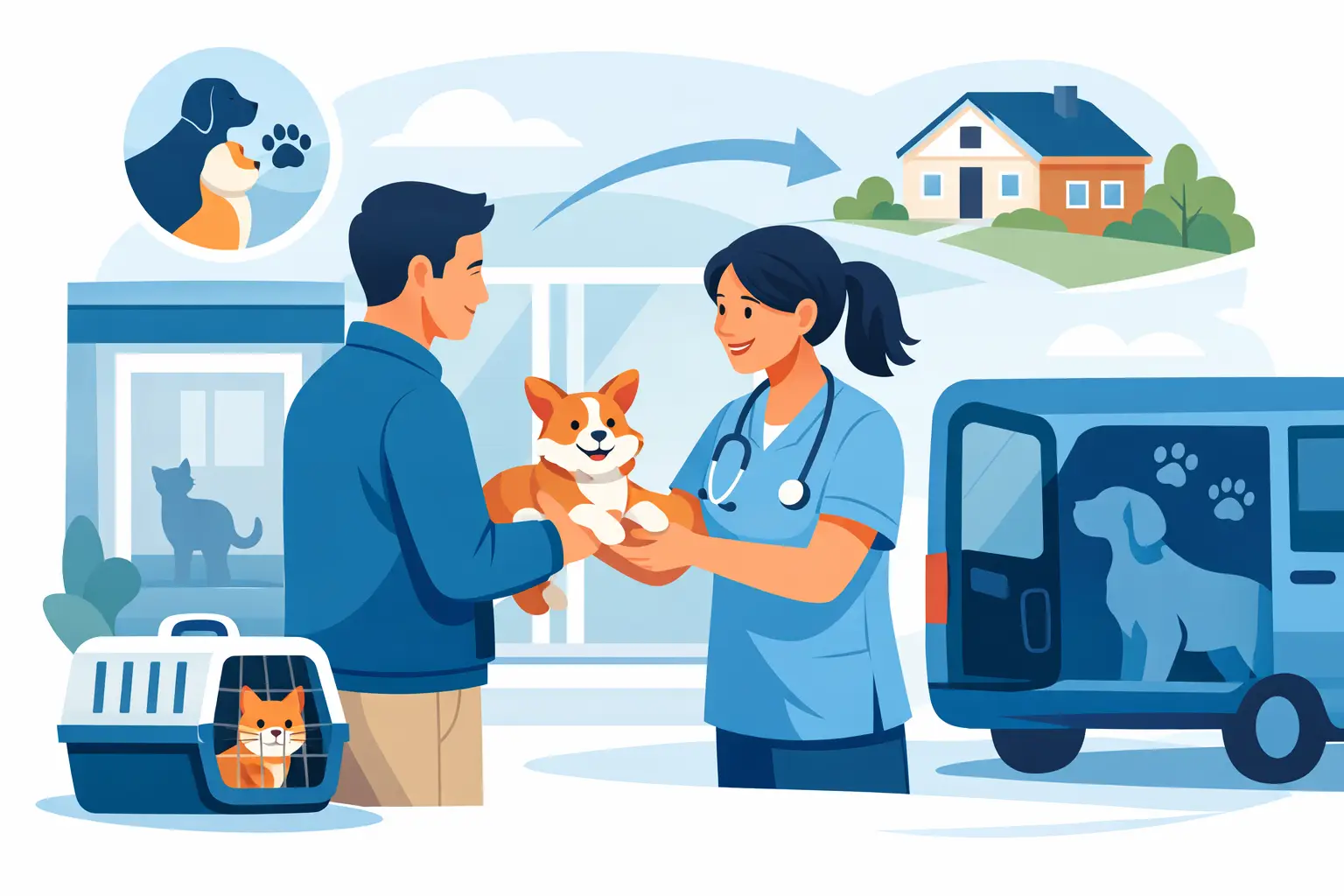
The call from the vet can come when you are stuck in a meeting, stranded without transport, looking after children, or hours away from home. Pet collection from veterinary practice is one of those jobs that sounds simple until you need it done quickly, safely and with the right information passed between everyone involved.
A trusted person collecting your pet can take a great deal of pressure off, but the arrangement needs to put the animal first. The veterinary team must be happy to discharge them, the collector needs clear authority and instructions, and the journey home must suit your pet’s condition. When those details are in place, an urgent collection can be organised without adding more stress to an already worrying day.
When a pet collection is the right solution
A collection service can be particularly useful when a pet has been treated and is ready to go home, but their owner cannot get to the practice in time. Perhaps your dog has had a straightforward check-up and you are delayed at work. Perhaps a cat has been admitted after becoming unwell and your usual lift has fallen through. It can also help families coordinating care for an older relative, or owners travelling who need somebody dependable to collect a pet on their behalf.
The key word is ready. A veterinary practice decides when an animal can leave, not the owner or courier. If your pet needs observation, oxygen, specialist restraint, a medical escort or immediate access to treatment, a standard collection is not suitable. The vet may advise that the animal stays longer, travels with you, or is moved using a dedicated animal transport arrangement.
There is a trade-off here. Fast collection is valuable, but it must never rush a clinical decision. A calm, approved handover twenty minutes later is better than a rapid collection that leaves the pet unsettled or without the care instructions they need.
Speak to the practice before arranging collection
Before asking anyone to collect your pet, phone the veterinary practice directly. Tell them who will be arriving, how they will identify themselves and where the pet is going. Ask whether the animal has been formally discharged and whether there are any conditions on collection.
Practices have different policies. Some will release a pet only to the registered owner unless written or verbal permission has been recorded. Others may be happy to hand over to a named third party once fees are settled and the owner has confirmed the arrangement. Do not assume the receptionist has been told. Make sure your permission is on the pet’s record before the collector sets off.
It also helps to ask what the pet will need for the journey. A small animal may require a secure carrier. A dog may need a lead, harness and a quiet route to the vehicle. If medication, a cone, bedding, food or paperwork is coming home too, make sure the practice knows these items must be handed over with the pet.
Give clear details for pet collection from veterinary practice
A fast job starts with accurate information. When requesting a collection, provide the practice name, full address, contact number, pet’s name, species and breed or size. Explain whether the pet will be in a carrier, whether a lead and harness are supplied, and whether there is anything the driver needs to know before collection.
Be factual about your pet’s temperament. For example, a nervous rescue dog, a cat that becomes distressed around strangers, or a large dog recovering from sedation may need a different approach from a relaxed, healthy puppy. This is not about labelling an animal as difficult. It gives the driver and practice a better chance to plan a safe handover.
You should also state the delivery address, the name and number of the person receiving the pet, and whether somebody will be waiting at the door. Pets should not be left unattended outside a house, in a porch or with an unprepared neighbour. The person accepting them should be ready to take the lead, carrier, medication and discharge notes immediately.
If your pet is returning to a different address, such as a family member’s home, tell the vet beforehand. This avoids an awkward delay at the desk when everyone expects the animal to be going somewhere else.
What the handover should include
The handover at the practice is the most important point in the journey. It should be calm, confirmed and complete. The veterinary team needs to know they are releasing the right animal to the right authorised person. The collector needs to receive the pet securely, along with anything essential for their care.
Medication deserves special attention. Ask the practice to label it clearly and provide instructions that the receiving owner can understand. A driver can transport a sealed bag of medication and paperwork, but should not be expected to interpret clinical advice, administer doses or make decisions about treatment.
The same applies to discharge instructions. If the vet needs to explain post-operative care, feeding restrictions, warning signs or a follow-up appointment, they should communicate those details directly to you or to a capable adult you have nominated. A quick call before collection can prevent confusion later that evening.
Check practical points too. Are the fees paid? Is the carrier properly closed? Is the dog wearing a secure harness rather than only a collar? Has the practice included the pet’s blanket or favourite toy, if it will help them settle? Small details can make the first hour at home much easier.
Planning a safe journey home
The quickest route is not always the best route if it means a rough, noisy or overly long journey for a recovering animal. A good collection plan balances urgency with comfort. The pet should travel in a secure carrier or with suitable restraint, away from loose items and extreme temperatures.
For cats, rabbits and other small animals, a sturdy carrier is usually essential. Covering part of the carrier with a light blanket can reduce visual stress, provided airflow is not blocked. For dogs, the vet’s advice matters most after treatment. Some may travel comfortably with a harness and appropriate restraint, while others may need a crate or a different arrangement.
Never arrange a collection if there is a concern that the pet may bite, escape, collapse or require treatment during the journey unless the appropriate specialist support is in place. A courier can solve an urgent transport problem, but a veterinary emergency still needs veterinary care.
It is also wise to keep the journey direct. Avoid adding extra errands, collecting shopping on the way, or leaving the pet in a parked vehicle while somebody runs inside. The job is to get them from the practice to their safe destination as fast as possible.
A simple way to arrange urgent help
For a time-sensitive collection, the process should not involve complicated forms or days of advance booking. Share the collection and delivery details, explain that it is a pet collection, and include the practice contact and discharge status. You should receive the price up front before confirming the job.
Once payment is made, a driver can be dispatched as fast as possible. At We Fetch, the aim is to assess the request quickly, give you a clear price and organise collection without making an already difficult day harder. However, a pet collection is always subject to the veterinary practice approving the release and the journey being suitable for the animal.
Stay available by phone while the collection is taking place. The practice may need final confirmation from you, the driver may need to clarify where to meet or park, and the receiving person should know when to expect the pet. A working mobile number for each person involved is more useful than a long chain of messages.
After your pet arrives home
Have a quiet, warm space ready before the pet comes through the door. Follow the practice’s feeding, exercise and medication instructions rather than relying on what normally works for your animal. After sedation or surgery, pets can seem unsettled, sleepy or unusually clingy, and that may be entirely expected. If anything worries you, call the veterinary practice that treated them.
A well-organised collection does more than solve a transport gap. It means your pet leaves the practice with permission, travels securely and arrives with somebody prepared to care for them. When time is tight, give the vet clear authority, give the collector the full picture, and keep the route home focused on one thing: getting your pet back to familiar surroundings safely.